Disclaimer:
The content published on this website is provided for general informational purposes only. Articles are generated with the assistance of artificial intelligence and are reviewed periodically; however, accuracy cannot be guaranteed in all cases. Readers are encouraged to verify important information from reliable and authoritative sources before relying on it. The website does not intend to mislead, and any errors found will be corrected when identified.
In the rich tapestry of Islamic teachings, the concepts of knowledge and wisdom hold paramount importance, yet they are often misunderstood. Knowledge (Ilm) is the accumulation of facts, information, and skills acquired through experience or education. In contrast, wisdom (Hikmah) transcends mere knowledge; it embodies the ability to make judicious decisions based on understanding, insight, and experiential learning. This distinction has profound implications for how Muslims approach their daily lives, spiritual practices, and ethical dilemmas.
At Airlink Hajj and Umrah, we recognize the significance of both knowledge and wisdom in guiding pilgrims on their spiritual journey. In our blog, you will find comprehensive updates on Hajj and Umrah, as well as insights that help deepen your understanding of these sacred practices. Through knowledge, you prepare for the rituals, but it is through wisdom that you truly experience the essence of your pilgrimage. Join us as we explore the vital differences between knowledge and wisdom within the Islamic context, empowering you to not only learn but also grow in your faith during your journey.
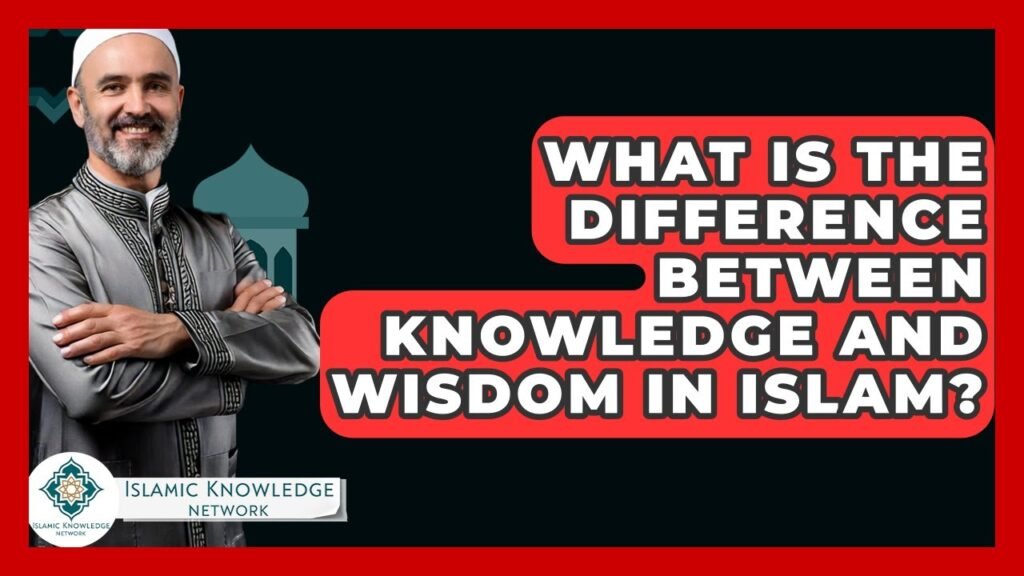
What’s the Difference Between Knowledge and Wisdom in Islam?
In Islam, the distinction between knowledge (ilm) and wisdom (hikmah) is profound and essential. Knowledge refers to the factual understanding of religious texts, history, and the teachings of the Prophet Muhammad (peace be upon him). It encompasses the study of the Quran, Hadith, and various Islamic sciences. Knowledge is valuable, as it provides the foundation for a Muslim’s faith and practices, including the rituals of Hajj and Umrah, which are vital aspects of Islamic worship.
On the other hand, wisdom transcends mere academic knowledge. In Islam, wisdom is the ability to apply knowledge in real-life situations with discernment and ethical consideration. It involves making sound judgments that reflect the moral and spiritual teachings of Islam. While knowledge can be acquired from books and scholars, wisdom is often garnered from life experiences and the ability to reflect on them in light of Islamic teachings.
Understanding the difference between knowledge and wisdom can enhance one’s spiritual journey, particularly during significant practices like Hajj and Umrah. At airlinkhajjandumrah.com, we provide all the updates on Hajj and Umrah to help you enrich your faith through both knowledge and wisdom, ensuring a fulfilling pilgrimage experience.
FAQ on What’s the Difference Between Knowledge and Wisdom in Islam?
FAQ 1: What is the definition of knowledge in Islam?
Answer: In Islam, knowledge refers to the understanding and information acquired through study, experience, or being taught. It encompasses the Quranic teachings, Hadiths, and other scholarly works that guide Muslims in understanding their faith and the world around them.
FAQ 2: How is wisdom defined in an Islamic context?
Answer: Wisdom in Islam is the ability to apply knowledge thoughtfully and judiciously in various situations. It involves discernment, insight, and the capacity to act in accordance with Islamic principles, leading to righteous behavior and sound decision-making.
FAQ 3: Can one possess knowledge without wisdom in Islam?
Answer: Yes, it is possible to have knowledge without wisdom. A person may be well-versed in Islamic teachings but may lack the ability to apply that knowledge effectively in daily life, leading to misguided actions or decisions.
FAQ 4: Why is wisdom considered more important than knowledge in Islam?
Answer: Wisdom is often viewed as more important because it implies not just the possession of knowledge but also the ability to use that knowledge for good. In Islam, a wise person is someone who can navigate life’s complexities, make ethical decisions, and contribute positively to society.
FAQ 5: How can a Muslim cultivate both knowledge and wisdom?
Answer: A Muslim can cultivate knowledge through study of the Quran, Hadith, and scholarly works, while cultivating wisdom requires reflection, experience, and seeking guidance through prayer and consultation with wise individuals. Engaging in community service and ethical reasoning also helps in developing wisdom.

Mushu, an experienced Saudi Arabia traveler and writer, shares insightful tips and spiritual reflections to enhance Hajj and Umrah journeys for fellow pilgrims. He has been to Makkah and Madina from 2016 to 2023 many times and his posts will reflect this.